

Winter is by far my favorite time to hike. Fewer people are fighting for prime viewing spots and the temperatures are perfect, so you’re not sweaty and there are no bugs. Throw in some snow and frozen waterfalls, and you have a magical adventure only a few will experience.
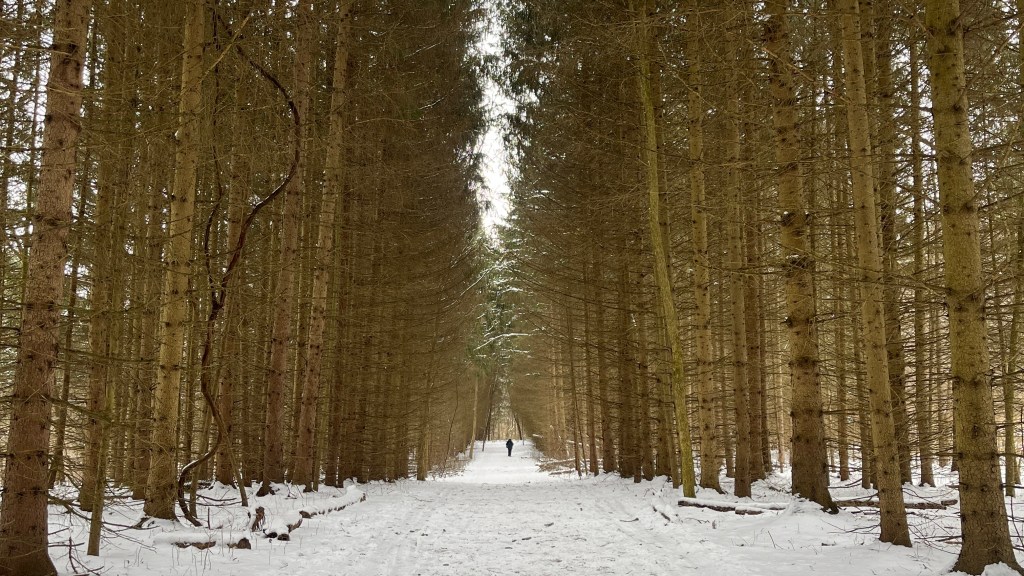
Winter hiking does come with its challenges and considerations. It’s important to plan your hike while keeping in mind shortened daylight hours and temperature fluctuations during your hike. It’s important to always hike prepared, with the right gear in your pack and on your body. Always check the weather forecast for your hike’s duration to avoid inclement weather.
Winter-Specific Hiking Wearables
For the safe enjoyment of a winter hike, it’s important to have the right gear and clothes from top to bottom. Hats, upper and lower body layers, socks, footwear, and gloves all play an integral part. When I’m shopping, I look for things like: is the piece versatile? Can I layer it or wear it in more than one season? Is it going to last? Because let’s be honest, this stuff isn’t cheap and we work hard for our money. Is it easy to wash? Is it made in the USA? By a small business? By a woman or other minority company? What guarantee does the company have? And what else about the company? Are they a B-Corp? Do they give back to the community? Do they practice sustainability? These factors go into my decision-making process.
Layers are your best friend in the winter. When I’m planning my hike, I check the weather hour by hour for the duration of my hike to make sure I’m wearing the right clothes for a pleasant hike. I choose fabrics like merino wool and fleece that are moisture-wicking yet warm. Most often I wear two layers, but when it’s very cold or windy, I may wear three. My layers consist of a couple of different weight Merino wool base layers, my fleece jacket, my puffer, a hoodie, fleece-lined leggings, and snow pants.
SmartWool Top and Bottom Base Layers
Depending on how cold it is outside determines which SmartWool top layer I use. For most winter hiking, I use the SmartWool Classic All-Season Long Sleeve Base. I love this layer because it is breathable yet warm. On fall days, it might be the only top I wear. On winter days, I wear this under my fleece, puffer, or hoodie, again, depending on how cold it is outside.
For those colder days, I opt for the SmartWool Classic Thermal Merino Base Layer Crew, again, paired with my fleece or puffer, depending on how cold it is. I have hiked in the teens in just the thermal base layer and my puffer and still needed to unzip a bit to thermoregulate as I started hitting inclines.
For my base bottom layer, I use SmartWool’s Classic All-Season Merino Base Layer Bottom under my BALEAF Hiking Pants. This keeps me warm to about freezing temperatures. If it’s colder, I wear these under my snow pants. Note — if it’s going to warm up during your hike and you think you’ll need to shed a layer, I opt for the fleece-lined legging instead, since this layer is not appropriate as a stand-alone piece.
I prefer SmartWool over any other brand for my layers because of their fit (they have plus sizes!), comfort, customer service, and quality. Merino wool is excellent for hiking because it is warm, lightweight, moisture-wicking, breathable, and durable.
L.L.Bean Sweater Fleece Full-Zip Jacket
L.L. Bean is another favorite brand for their fit, comfort, and quality. This year, I added their Full-Zip Fleece Jacket to my layer options. It has been great as a fall hiking outer layer, as well as a middle layer, for extremely cold and windy days. Fleece makes a great hiking layer because it is lightweight, warm, and wicks moisture. I love L.L. Bean gear for many reasons, but one of the biggest is that they clearly have ladies’ curves in mind when they make their clothes. They are available in plus sizes and are stretchy for curves.
L.L.Bean Women’s Boundless Down Hybrid Jacket
My go-to puffer is no longer available at L.L.Bean, which is unfortunate because it’s so comfortable and warm! I looked to see if they had anything similar, and they do have a new version of the boundless down, but I don’t see the same features on it that I love in mine. Mine has stretchy fabric under the arms and around the hips, which my female body loves! That being said, get a good-quality puffer that works for you! I would consider a few features beyond fit. Look for a puffer that is rated for some kind of water repellency so you can enjoy beautiful snowy hikes. Wind resistance is also an important factor. I also recommend one that has a small pack-down size. For days that start off cooler and warm up, you can take off the puffer and pack it into your pack. If you go with a puffer with a “warmer” rating, it will be more versatile than a heavier jacket, because all you need are layers. Being able to add or remove layers as you are hiking is invaluable.
BALEAF Fleece Lined Leggings
BALEAF’s Fleece Lined Leggings check all the boxes — they are comfortable, stretchy, warm, and they come at a great price. While other companies are charging double or triple the BALEAF cost, you can pick up a pair of these for less than $40. Oh, and did I mention they have pockets!? I wear these alone in the 40s, and as a layer under regular hiking pants or snow pants when it’s a day I will need to strip my layers so I have actual pants underneath.
Eddie Bauer Women’s Rainier Fleece-Lined Pull-On Pants
My go-to outer bottom layer is the Women’s Rainier Fleece-Lined Pull-On Pants. These pants are super warm, they block the wind, and are water-repellant. Throw these on over the fleece-lined leggings or the SmartWool base bottom layer, and you can hike for hours in complete comfort.
Darn Tough Merino Wool Socks
For socks, I have tried lots of different cushions, brands, and fibers. Hands down, my favorites are again merino wool, but I have found alpaca wool to be great too! I haven’t found any big-name alpaca socks that I like, but I have some great locally owned farms that make alpaca hiking socks and I will grab them anytime I see them at vendor shows or farmer’s markets. Otherwise, Darn Tough is my go-to. Darn Tough is made in Vermont and has a lifetime guarantee. Their socks come in various lengths, cushions, and weights to fit your hike perfectly. During the winter, I prefer their heavier-weight, taller socks. They have lots of fun colors and designs too. Click here for free shipping on your order of $50 or more!
SmartWool Thermal Merino Neck Gaitor
For windy or extremely cold days, a neck gaiter will do the trick. My gaiter of choice is the Merino Wool SmartWool option. Lightweight and takes up no space, this lives rent-free in the front pocket of my pack all winter long. You can use it to cover just your neck or pull up to cover your chin, mouth, or all the way up over your nose. I have found that after I warm up, I can pull it off as the rest of me stays plenty warm.
Hats
I have several hats to pick from, depending on the weather and whether or not it’s hunting season. I have an orange beanie for hunting season. I have a lightweight beanie for “warmer” winter days and a heavier-weight beanie for cold winter days. The only brand recommendation I have here is Love Your Melon because I’m a nerd and they are super cute. I love Harry Potter and Star Wars and have some options of both weights in both fandoms. They also have a really noble mission.

Gloves
No specific brand recommendations here either, though I’m sure the SmartWool brand is great! I have always picked my gloves up at TJMaxx for a good price. I go with running gloves because they are moisture-wicking and typically have touch screen-friendly fingertips, which means I don’t have to pull them off and on when I want to snap a picture. If anyone has recommendations on favorite gloves, I would love to hear them!
Winter-Specific Hiking Gear
Now let’s talk about gear. For winter hiking, I use a larger pack with more cargo space, pockets, and attachment points. I carry my essentials such as first aid, emergency blanket, toiletries, year round, and then customize the rest of the gear based on the season and even the day. I keep a crate in the back of my truck at all times to hold anything that I don’t currently have in my pack, so I can easily add/remove as needed. Other than the special wearables, in the gear department, winter musts are trekking poles, footwear with good traction and preferably waterproof, and ExoSpikes.
Gregory Women’s Hiking Packs
Gregory Women’s Hiking Packs are the only packs that are actually made for women in more than just “feminine” color options. Gregory takes women’s hips and chests into consideration in their design. They also make plus sizes in several models and the hip belt pockets are actually accessible in the front! They are made in Salt Lake City, Utah. I use my Gregory for every cold weather hike over my trusty day pack, simply because it is bigger and will hold more. My personal go-to is the Maya 20, plus.
Black Diamond Carbon Z Trekking Poles
Another essential for winter hiking is trekking poles. They are super helpful, whether it’s icy or muddy. Trekking poles have a myriad of other benefits as well, such as taking pressure off the knees and increasing circulation, which keeps your hands from swelling, so they are a good thing to use year-round as well. I prefer the Black Diamond Carbon Z Trekking Poles because they are ultralight and they are trifold, which means they can live rent-free in my pack to have them when needed. Trekking poles come in different lengths, so make sure you measure and get the size for you. You want your arms to make a perfect right angle when holding them on flat ground.
Footwear
Footwear is a tough one to recommend because everyone’s foot is different. Some people love hiking boots all year round, others love trail runners. Some have different shoes for wet or cold weather vs cold weather. For winter hiking, the most important thing is that your feet are warm and dry, and you have traction in mud, snow, or ice.
Kahtoola ExoSpikes
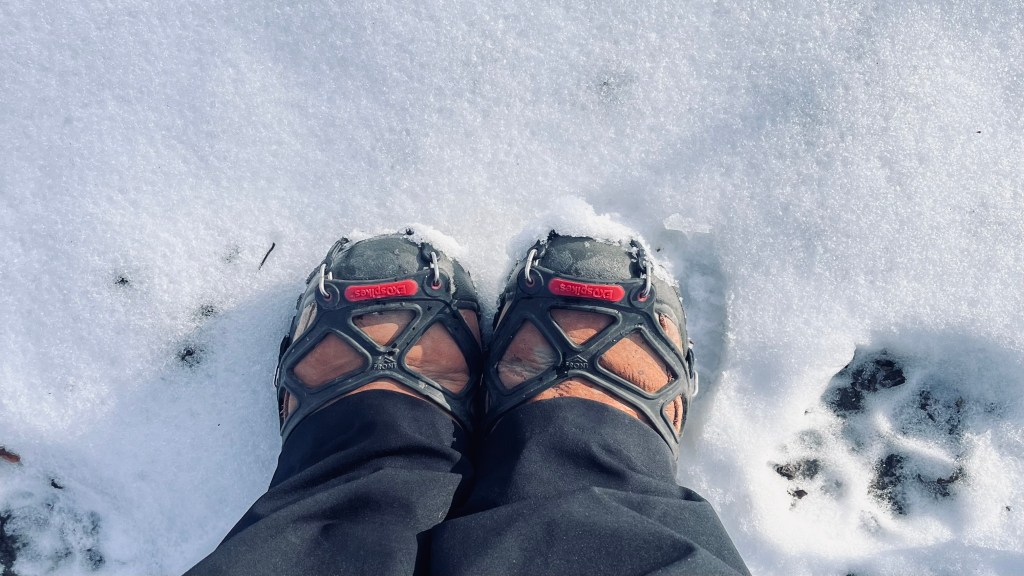
For icy days, the Kahtoola ExoSpikes add traction to any footwear. They are lightweight and take up minimal space, so again, they stay in my pack all winter long for when they are needed. Super easy to slip on over your footwear. I have tried other brands, such as YakTrax, which work okay on the ice, but they do not work well in mud — they tend to clog up with mud and leaves or other debris, which makes them usable for only 1 season. I do still keep the YakTrax in my truck to loan out on group hikes because the spikes tend to be the most under-thought-of piece of winter gear. I keep a carabiner on my pack to attach them to the outside after use if they are wet or muddy.
I hope you have found this informative and helpful! I plan on writing more in depth posts about each piece or category of gear in the future. This was meant to be an overview. Please let me know what questions you may have, and of course, I’d love to hear about gear that you have tried and love too!
Affiliate Disclaimer
This blog is not meant to be an all inclusive list of winter gear, these are tried and true Meghan approved gear that I have used in and around Northeast Ohio winters. Some of the brands, I am an affiliate partner. This means that if you click on the link and make a purchase, I may earn a small commission at no additional cost to you. These commissions help support the blog and allow me to continue creating content about outdoor adventures, gear, and tips.
I only recommend products and services that I genuinely believe in and have personally used or researched. Your trust is important to me, and I will always provide honest and unbiased recommendations.
Thank you for supporting my blog and helping me keep the outdoors accessible and enjoyable for everyone!

 She is Wild & Free